
Before ranking commercial solar street light quotes, check that each offer covers the required lighting, night schedule and supply scope. If a bidder misses a mandatory requirement, record the variance and follow your procurement rules for clarification or revision. Compare installed cost once the offers are on the same basis.
Preparing a tender? Use the RFQ checklist below. Already have quotes? Go to the worksheet download to check two offers side by side.

1. Issue the same brief to every supplier
Send each bidder the same request for quotation (RFQ), including the current drawings and any applicable addenda. Mark which requirements every offer must meet and which details bidders can propose. If an input is unknown, ask bidders to state their assumption. List the quantities and deliverables in a bill of quantities (BOQ), with separate pricing for any alternative the tender allows.
| Give each bidder | Ask them to return |
|---|---|
| Tender documents. Current drawing revisions and any applicable addenda. | List the drawing revisions and addendum numbers used to prepare the quote. |
| Site and geometry. Location, plan or dimensions, road width, obstructions, approximate quantity and any fixed pole positions. | Proposed arrangement, mounting height, fixture orientation and site assumptions that still need confirmation. |
| Lighting task. Identify travel lanes, pedestrian routes, loading zones and any areas that need different targets. State the applicable project criteria when known. | Calculation for the proposed luminaire and optics, with the evaluation area, layout, light levels, uniformity and other applicable checks. |
| Operating schedule. Hours at each output level, sensor behaviour if allowed, acceptable dimming periods and any required reserve. | Controller schedule, electrical load at each stage, usable battery energy, solar resource basis and how the system recovers after low-solar periods. |
| Mechanical interface. New or existing poles, foundation responsibility, mounting limits, wind exposure and site access. | Pole and bracket drawings, the design basis for the proposed assembly, installation constraints and a clear list of supplied parts. |
| Delivery and acceptance. Delivery point, quantity, programme and required inspection or handover records. | Itemised offer, exclusions, lead-time basis, proposed tests, warranty coverage and service responsibilities. |
The scope may span several contracts. A UNHCR procurement notice lists separate luminaire specifications, pole specifications, installation documentation and a financial offer form. For your project, use one master list to show who supplies, installs and accepts each interface, even if several firms quote the work.
2. Match the evidence to the equipment in the quote
Start with the exact luminaire, optics, panel, battery, controller programme and mounting arrangement. A family brochure can help shortlist products. The written bid should identify the configuration and document revisions that will apply to your order.
Check the light on the ground. Ask for the IES or LDT photometric file for the quoted optics and a calculation based on your layout and applicable criteria. Check the mounting height, tilt, spacing and obstructions used in the model. If the project has a separate dimmed operating stage with a lighting requirement, ask how that stage was evaluated. The DIALux design guide explains the calculation workflow.
Check the energy behind the operating claim. Ask for nightly load in watt-hours (Wh), usable battery energy under the stated conditions and the local solar input used for sizing. For a reserve claim, establish starting state of charge, allowable discharge, temperature, the specified night schedule and whether solar input is assumed during the reserve period. Check recharge time separately. If lighting output is controlled by a motion sensor, confirm the permitted minimum output, what triggers a change, and what happens if the sensor fails.
Check the structure and accessories. A pole and bracket should be assessed with the proposed equipment and site exposure. If the design reuses existing poles, agree who verifies the condition, capacity and attachment interface. Compare the exact hardware and installation documents before approving an alternate configuration.
The Efficiency for Access procurement handbook lists useful supplier submissions for off-grid pedestrian and public-space lighting. For roads used primarily by motor vehicles, establish the applicable road-lighting criteria and project design with the responsible lighting professional.
3. Compare the quotes on one scope
Record a status against each mandatory requirement before ranking the offers.
- Meets. The quoted configuration matches the requirement and the supporting documents identify that configuration. Check the commercial scope next.
- Evidence pending. The bid claims to meet the requirement but the supporting document is missing, incomplete or for another configuration. Log the gap and request clarification where permitted. Keep the requirement open until you can verify it.
- Deviation. The quoted configuration differs from the requirement. Record the difference and follow the tender rules for a conforming revision or a permitted alternate.
Evaluated installed cost is the quoted price plus the buyer-paid costs still needed to complete the agreed scope. Include civil work, unloading, installation and commissioning where they fall outside the quote. Check the trade term, named place, currency and tax basis before adding charges. If verified layouts need different numbers of poles or lights, compare whole-project totals and record the quantities used. Mark any total with material unpriced work as provisional.
Worked example: 40 lights for a commercial access road
This hypothetical project requires 12 hours at the specified lighting level each night. Both bids assume 40 lights, the same currency, tax basis and delivery point. Offer B appears $5,000 cheaper, but it excludes some civil work and falls below the lighting requirement after the fourth hour.
| Check | Offer A | Offer B | Buyer action |
|---|---|---|---|
| Night schedule | 12 hours at the specified lighting level | 4 hours at that level, then 8 hours dimmed below the requirement | Record B’s deviation. Request a conforming revision if permitted. |
| Nightly energy per light at the battery output | 40 W × 12 h = 480 Wh | (40 W × 4 h) + (15 W × 8 h) = 280 Wh | Recheck usable battery energy and solar recovery for the revised schedule. Use the photometric file and site calculation to verify light levels. |
| Quoted package for 40 units | $40,000 including poles, anchors and foundations | $35,000 with the same listed work except anchors and foundations | An illustrative $6,000 allowance for excluded work brings B to $41,000 before the schedule revision. Confirm the missing scope and obtain firm pricing. |
| Eligibility for price ranking | Proposed schedule matches the brief. Mark it Evidence pending if required proof is missing. | Current schedule fails the brief. The $41,000 subtotal excludes any cost of making it comply. | Keep A out of price ranking until its evidence and scope are confirmed. Record B’s deviation and seek a compliant revision where permitted. |
When the decision changes. Suppose the owner approves lower lighting levels after hour four and the procurement rules allow a common revised brief. Ask both suppliers to price that schedule and verify that their layouts meet the lighting criteria for both periods and that the energy systems support the revised duty. If B confirms a $35,000 base quote and the excluded work is firmly priced at $4,000, B totals $39,000. If A confirms $40,000 on the same scope, B becomes the lower-cost eligible offer. With those base prices, B ties A if the excluded work costs $5,000.
If the buyer also evaluates ownership cost, show installed cost and ownership cost separately. Compare expected replacements, labour and other running costs over the same evaluation period using the same assumptions for each bid.
4. Record exceptions and carry them into the order
Use one row for each requirement, especially when a supplier writes “complies” but lists a different controller programme, pole or delivery term elsewhere. Attach the document or quote line that resolves the question. Assign unresolved items to a person and a due date.
Download the fillable bid comparison worksheet (ZIP)
Extract the ZIP and open the HTML file in your browser. Enter both offers, add project-specific requirements, and export a CSV or save a PDF before closing the worksheet. The comparison example above shows how to record a provisional total.
Record each bidder’s status separately. Use the supporting document or quote line to explain the status and give each follow-up an owner and due date.
| Requirement | Status A | Status B | Next action |
|---|---|---|---|
| Night output and hours | Evidence pending. A quotes 12 hours at the specified level. | Deviation. B drops below the minimum after four hours. | Ask A for matching lighting and energy calculations. Seek a conforming revision from B where permitted. |
| Foundations and anchor bolts | Meets, if A’s scope schedule confirms both are included. | Deviation from the required installed scope. B excludes both. | Confirm design, supply and installation responsibilities, then obtain a firm price for the excluded work. |
For a proposed component substitution, record the model, revised datasheet and any required lighting, energy or mechanical review. Mark the alternate as approved after the responsible party accepts it in writing.
A clarification you can send to a bidder
Please confirm whether foundation design, anchor bolts and foundation installation are included in your base quote. For each item, identify the responsible party, the drawing or BOQ line, and the cost if you can supply it separately. Mark any work that remains for the buyer to price.
If your process allows a revised offer, also ask for the price of the required 12-hour schedule, its matching lighting calculation and battery sizing, and the revised quote reference and date. Record the scope clarification and the lighting revision on separate rows.
Apply the procurement rules for your project when deciding what can be clarified or accepted as an alternate. City of Thornton IFB 340-25 is one example of asking bidders to identify deviations in a requirements traceability matrix. On the city’s archive page, open Solicitation Document and see Section B.2. Carry approved items into the purchase order with the equipment schedule, drawing revisions and included services.
5. Agree the sample, delivery and site acceptance checks
Plan what is checked at each stage and who signs it off. A sample helps when you need to check the physical interface, finish, controls or service access. Ask for it in the proposed order configuration and record the reviewed revision.
- Before approving the order, close any gaps in the proposed optics, controller schedule, structure and supply scope. Put the approved quote and drawing revisions, operating schedule and agreed exclusions on the order or its attachments. Agree what triggers a new approval if a component changes.
- Before shipment or at receiving, check model identifiers, quantities, included fixings, approved components, documentation and packing condition. If sampling is used, agree how units are selected and what happens if a check fails.
- At commissioning, verify installed height and orientation, controller settings and scheduled switching. If site light measurements are required, agree the measurement grid, operating stage, equipment and comparison criteria in advance. For a specified reserve period, agree separate test or calculation evidence and the applicable starting and environmental conditions.
- At handover, obtain the equipment schedule, approved settings, field records, manuals, spares list and warranty contact. Establish who diagnoses faults, supplies replacement parts and covers removal and refitting if a claim is accepted.
LUXMAN product options to include in your RFQ
Start with the layout and operating requirements in your brief. Ask for the exact model and equipment schedule so you can compare both configurations against the same lighting targets and installed scope.
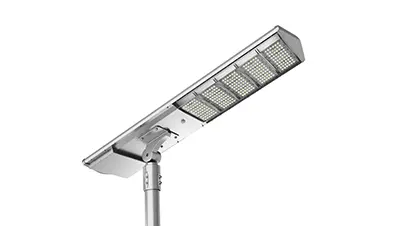
MY Series all-in-one solar street light
Shortlist the MY Series when the required luminaire position also gives the solar panel suitable sun exposure and leaves room for maintenance.
Ask for the proposed mounting height, photometric file, output schedule and the scope of the supplied pole and bracket.

SF Series separated solar street light
Shortlist the SF Series when panel exposure or mounting constraints call for positioning the panel separately from the luminaire.
Ask for the panel position, bracket, cable route and installation scope, along with the photometric file and energy calculation for the quoted setup.
Frequently asked questions
Can I request a quote before choosing a pole height or model?
Yes. Share the location, intended use, site dimensions or a plan, and operating hours if known. Ask suppliers to identify their starting layout and what remains to be confirmed before you compare final prices.
Is it acceptable to compare integrated and split systems?
Yes, if you compare them against the same lighting and operating requirements. Integrated equipment can simplify assembly where the luminaire position also offers suitable solar exposure and service access. A separately mounted panel may suit a site with shading or different orientation needs. Include the revised support, cabling and access work in the split-system offer.
How should a quote show a three-night reserve requirement?
Write out the hours and output per night, the assumed starting charge, charging during those nights if allowed, and the battery conditions. Ask the supplier for the calculation or test that supports those assumptions and a separate estimate of recovery time. If bidders assume different output schedules, ask for revisions on the same basis.
Do I need both an itemised quote and an equipment schedule?
Use both when evaluating a project package. The itemised quote establishes what is included and who pays. The equipment schedule ties those items to the models, options and document revisions used for the design and acceptance checks.
Can we use a sample to close a missing photometric file?
A sample can help verify mounting, finish and controls. For a lighting layout that requires calculation, request photometric data for the exact quoted optics and use it to check the proposed layout. Keep the lighting evidence open until the project’s verification requirement is met.
Request a comparable project quote from LUXMAN
For an initial discussion, put the project location, intended use and rough dimensions in the contact message. Add operating hours, quantities and delivery point if known. If you have drawings, a BOQ or a specification, mention them and share the files during follow-up. LUXMAN can propose a starting configuration for the lighting, solar and battery system, controls, poles and mounting, and identify what needs confirmation before final pricing.
Explore commercial project lighting configurations or use the solar street lighting project selection sheet to organise your site information. Request a project quotation.