
BEST 9 types remote control solar street light
solar street light with remote, remote controlled solar LED street light
The core value of remote control for solar street lights lies in upgrading independent, off-grid solar lighting devices into an intelligent network node that can perceive, interact, and be optimized. It solves not only the problem of “turning on the lights,” but also the question of “how to light them smarter, more economically, and with less hassle.”
Why Remote Control Has Become a “Must-Have”
“Must-Have” does not mean a technical compulsion, but rather that in modern lighting management pursuing high efficiency, energy savings, and low maintenance costs, it has become the most cost-effective and forward-looking choice. The main reasons are as follows:
- Addressing the O&M Pain Points of Solar Street Lights: Solar street lights are often deployed in remote, dispersed, or wiring-difficult areas (such as suburban roads, parks, countryside). Traditional maintenance requires personnel to travel long distances for on-site inspections, incurring extremely high costs. Remote monitoring and fault alarm functions directly target this pain point, transforming maintenance from “reactive response” to “proactive prevention,” and are key to ensuring the reliable operation of such off-grid lighting systems.
- Unlocking the Full Potential of Intelligent Control: Without remote communication capabilities, the “intelligence” of street lights is limited to single-lamp level light control, time control, or sensor control. After connecting to the network, optimization based on global data analysis and strategies can be realized. For example, the platform can dynamically adjust the brightness of all street lights in a block based on real-time pedestrian and vehicle flow data across the area, something single-lamp intelligence cannot achieve.
- Adapting to Scaled Management and Future Expansion: When the number of installed solar street lights reaches dozens or hundreds, the lack of remote centralized management will make O&M work extremely burdensome and prone to omissions. A remote control system is the only efficient way to achieve large-scale and refined management. At the same time, it lays the foundation for future expansion with additional functions.
Luxman 9 types remote controlled solar LED street light
Remote/cloud capabilities: cloud monitoring; OTA firmware updates; remote dimming and scene-driven control; multiple sensor modes
LAMPIONE STRADALE SOLARE AD ALTA LUMINOSITÀ – SERIE HS
- Da 15.000 lm a 20.000 lm
- Autonomia massima 2-3 giorni di pioggia
- IP66 impermeabile
- CCT:6000K-7000K(OEM)
- LiFePO₄ Battery:30~60AH
- Mounting height:10~12m
- High light efficiency
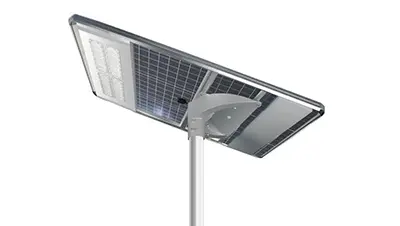
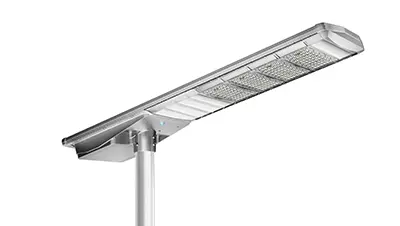
LAMPIONE SOLARE INTEGRATO – SERIE MP
- Progettazione integrata
- Autonomia massima 3 giorni di pioggia
- Remote Control & Multiple sensor modes
- CCT:6000K-7000K(OEM)
- Lumens:4000~15000lm
- LiFePO₄ Battery:30~60AH
- Mounting height:5~12M
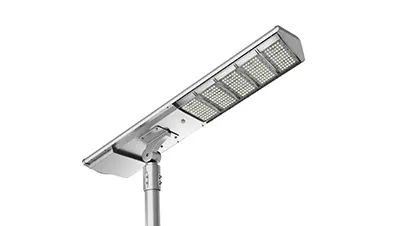
LAMPIONE SOLARE TUTTO IN UNO – LA MIA SERIE
- Progettazione integrata
- Autonomia massima 5~7 giorni di pioggia
- Remote Control & PRI Sensor
- CCT:6000K-7000K(OEM)
- LiFePO₄ Battery:200~500WH
- 4000~10000lm
- Mounting height:6~10m
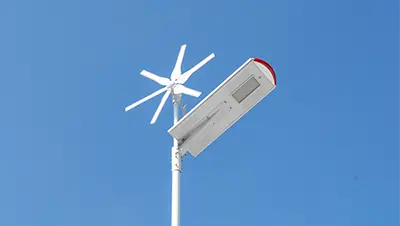
LAMPIONE STRADALE IBRIDO SOLARE EOLICO – serie INF
- Energia eolica ed energia solare
- Operazione da 5 a 7 giorni di pioggia
- Remote control & PRI control
- CCT:3000K – 6500K
- Lumen Efficiency:130~150LM/W
- LiFePO₄ Battery:532WH
- Mounting height:6~10m
LUCE SOLARE DA PAESAGGIO DIVISA – SERIE G2
- Efficacia fino a 165lm/w
- Autonomia massima 5~7 giorni di pioggia
- IP66 impermeabile
- CCT:6000K-7000K(OEM)
- Lumens:4000~15000lm
- LiFePO₄ Battery:30~60AH
- Mounting height:5~12M
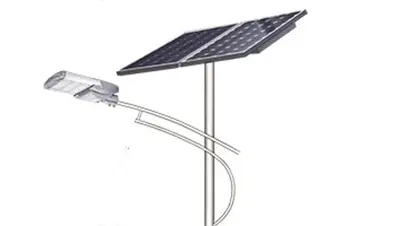
LAMPIONE STRADALE A LED PER ESTERNI – SERIE EAGLE GEN4
- App and PRI Smart
- IP66 IK08,Optional C5-M grade
- 7 Rainy days Lighting, Lithium Battery
- Install height:4-9m
- CCT:3000K – 6500K
- Lumen Efficiency:130~150LM/W
- Lumens:3900-9000lm
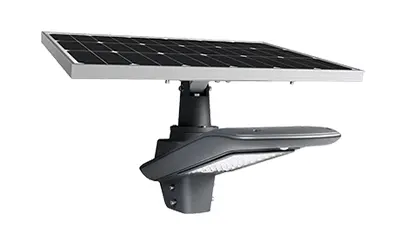
LAMPIONE SOLARE A LED PER ESTERNI – SERIE S2
- Sensori dal tramonto all'alba
- Autonomia massima 5~7 giorni di pioggia
- Modalità di rilevamento PIR
- CCT:3000K – 6000K
- Lumens:2000 – 11000 lm
- LiFePO₄ Battery:9~30AH
- Mounting height:5~12M
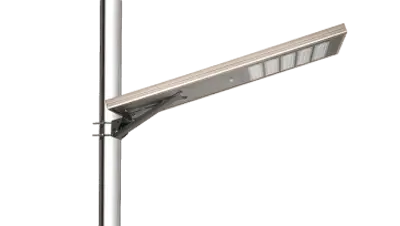
LAMPIONE STRADALE SOLARE ALL IN ONE – SERIE S3
- Tutto in un unico design
- Operazione 7 giorni di pioggia
- Efficacia ad alta luminosità opzionale
- CCT:3000K – 6000K
- Lumens:2400 – 9600 lm
- LiFePO₄ Battery:10~28AH
- Mounting height:5~10M
- 120 lm/W(160lm/W optional)
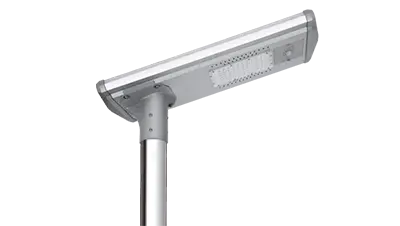
LAMPIONE SOLARE CON TELECAMERA A CIRCUITO CHIUSO – SERIE S3C
- Monitoraggio video 24 ore su 24
- 12 ore di tempo luminoso
- Telecomando
- CCT:3000K – 6000K
- Lumens:1800 – 7200 lm
- LiFePO₄ Battery:14~28AH
- Mounting height:5~9M
- 120 lm/W(160lm/W optional)
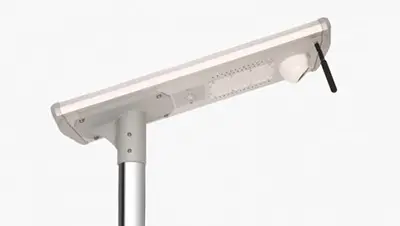
Core Advantages of Remote-Controlled Solar Street Lights
Ultimate Management and O&M Efficiency
- Centralized Monitoring and One-Click Operation: Management personnel can use a monitoring cloud platform on terminals such as computers or mobile phones to view the working status of hundreds or thousands of street lights in real time, including voltage, current, brightness, and on/off status, and perform remote batch on/off, dimming, or mode switching. This completely changes the inefficient model of traditional street lights requiring manual individual inspection and operation.
- Intelligent Diagnosis and Precise Maintenance: The system features automatic alarm functions. Once a street light fails (e.g., battery over-discharge, component damage, light source failure), an alarm message is immediately sent to the management platform, with quick fault location. This allows maintenance personnel to “follow the map” and go directly to the problem point for repair, greatly reducing troubleshooting time and maintenance costs.
Significant Energy Savings and Cost Optimization
- On-Demand Lighting to Avoid Waste: Through remote control, you can easily achieve scheduled on/off, scene modes (e.g., daily mode, holiday mode), and smart dimming. For example, during the late-night hours when there is little pedestrian or vehicle traffic, the platform can issue a unified command to adjust street lights to low-power operation, or only trigger high brightness through PIR sensors when motion is detected, thus significantly saving battery power and extending autonomy on rainy days.
- Extend System Lifespan: Intelligent charge and discharge management strategies can prevent battery overcharging or over-discharging. Remote monitoring can also promptly detect issues such as declining battery health, thereby extending the service life of the entire lighting system.
Enhanced Functionality and Scenario Adaptability
- Flexible Response to Complex Needs: No longer simply “on at dark, off at dawn.” Remote control enables flexible adjustments based on seasonal changes, weather conditions (e.g., earlier activation on cloudy/rainy days), and special events (e.g., activating specific color or brightness modes for festivals).
- Becoming a Smart City Interface: The remote control unit is the “brain” and “soul” of smart street lights. It enables solar street lights to be more than just lighting tools, but to become “shared light poles” carrying multiple functions such as environmental monitoring, video surveillance, and information broadcasting, providing data collection and service nodes for smart cities.
In summary, remote control endows solar street lights with “vitality” and “insight.” It is not only a tool for saving electricity costs, but also a strategic investment that reduces overall operating costs, improves public service quality, and embraces the future of smart cities. For any municipal unit, scenic area, or community that has plans for or has already deployed solar street lights on a large scale, adopting a remote control solution has become an obvious and efficient choice.