
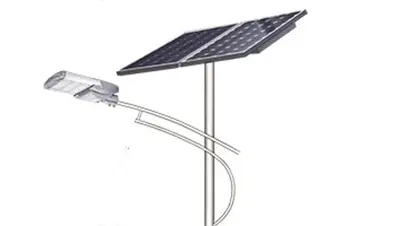
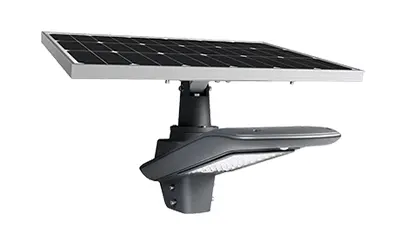
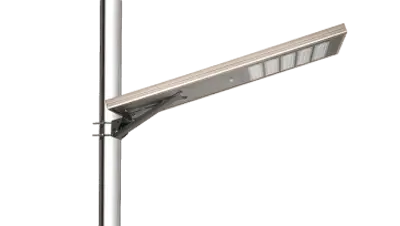
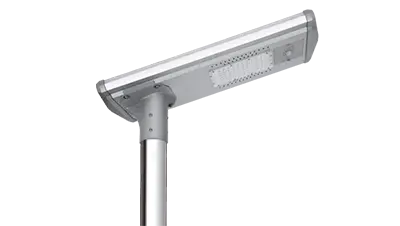
1. Core Advantage: Significant Improvement in Energy Efficiency and Extended Lighting Duration
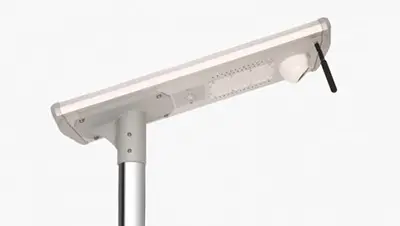
Solar street lights rely on limited battery storage, and motion sensors are the most effective means to achieve “on-demand lighting” and avoid energy waste.
- On-Demand Full Brightness, Static Dim Light: Solar street lights equipped with motion sensors typically utilize an intelligent operational mode. When the sensor detects pedestrians or vehicles entering its detection range, the lights automatically switch to full-power illumination; when no activity is detected, they automatically dim to a low-power state (such as 30% brightness or lower) or turn off entirely. This design can save up to 80% of energy compared to a mode that remains fully illuminated from dusk to dawn.
- Addressing Energy Shortages: Solar power generation is greatly affected by weather. During prolonged rainy spells or in winter’s low-light conditions, battery charging may not support all-night full illumination. Motion sensors, through energy-saving modes, can significantly extend the continuous operating time of street lights in adverse weather, preventing system failure due to energy depletion, thus enhancing system reliability and availability.
2. Enhanced Functionality and Safety
Motion sensors provide solar street lights with smarter and more practical functionalities.
- Proactive Safety and Security: Motion-triggered illumination can serve as a warning and lighting mechanism for pedestrians or vehicles suddenly entering dark areas, reducing the likelihood of accidents. The sudden brightness can also deter potential intruders, enhancing regional security.
- Improved User Experience: In areas like residential neighborhoods, garden pathways, and parking lots where continuous high brightness is not necessary, motion sensors can offer an experience of “lights on when people approach, dimming when they leave,” ensuring ample light when needed while avoiding light pollution and disturbances to others.
3. Collaboration and Comparison with Light Control Sensors
Typically, solar street lights combine light control sensors (Dusk-to-Dawn Sensors) and motion sensors for “dual intelligent control.”
- Clear Responsibilities: Light control sensors manage the system’s overall switch based on ambient light levels (automatically turning on at dusk and off at dawn), while motion sensors handle dynamic adjustments of brightness levels once the system is activated. This combination ensures that street lights operate only during necessary nighttime hours and further optimizes energy consumption during the night.
- Limitations of Single Light Control: If only light control sensors are used, the street lights will operate continuously at a set power level throughout the night, unable to adjust based on actual pedestrian and vehicular traffic, leading to ineffective energy consumption during unoccupied times, which is a suboptimal choice in terms of energy efficiency.
In summary, choosing a motion sensor for solar street lights essentially represents a smarter, more economical, and more reliable energy management strategy. It directly addresses the core pain point of limited energy storage in solar systems, ensuring stable operation of street lights under various weather conditions while adding value in terms of safety and user experience. For solar lighting projects that prioritize efficiency, longevity, and practicality, motion sensors are a crucial component.
How to Select Mainstream Product Series to Match Your Needs
Based on your product catalog, we can categorize offerings to align with different procurement requirements. Use the table below as a quick reference to map scenarios to recommended series and key features.
| 应用场景 | Core Requirements | Recommended Series | Key Feature Analysis |
|---|---|---|---|
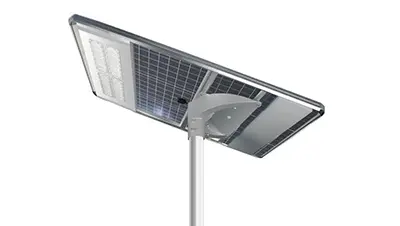
| Main arterial roads / plaza high-mast lighting | Very high brightness, wide-area coverage, reliable autonomy | HS SERIES | Highest lumen output (15,000–20,000 lm); designed for 10–12 m high masts to ensure ample illumination for major roads and large plazas. |
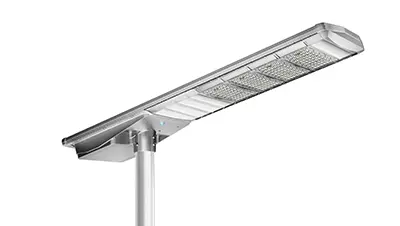
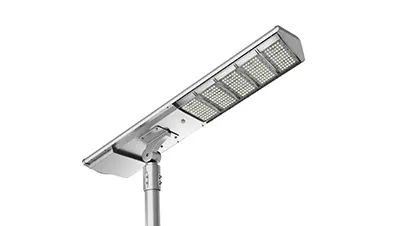
| Standard roads / campus lighting | Balanced performance, good cost-efficiency, smart control | MP SERIES MY SERIES | All-in-one design with easy installation and maintenance. MY Series offers longer autonomy (5–7 days) suitable for areas with average sun exposure; MP 系列 covers a wide lumen range, compatible with 5–12 m pole heights for flexibility. |
| Energy-saving and landscape-first scenarios | Extreme energy efficiency, long autonomy, aesthetic integration | G2 SERIES | Split design with high luminous efficiency up to 165 lm/W; ideal for maximizing energy use in landscapes, boulevards, and park paths. |
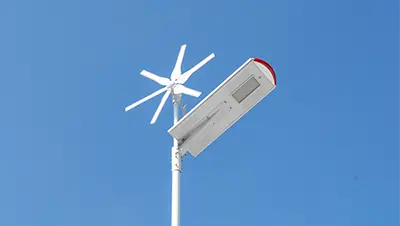
| High-wind or unstable energy regions | Energy redundancy, ultra-high reliability | INF SERIES | Wind-solar hybrid system adds wind power generation to supplement solar, ideal for windy or short sun exposure regions to greatly ensure power supply. |
| Security and monitoring integration | Lighting integrated with surveillance, reduced pole count | S3C SERIES | Innovative 24/7 video surveillance integrated into a single pole, cutting total cost for perimeter security in communities, parking lots, and warehouses. |
| Smart city management projects | Remote centralized management, data monitoring | GEN4 SERIES | Supports app-based smart control for remote on/off, dimming, fault diagnostics; a premium choice for building large-scale, smart lighting networks. |
Frequently Asked Questions (FAQ)
- Q: Do PIR sensors fail in winter or during rain?
A: Quality PIR sensors include environmental temperature compensation to maintain stable operation. Detection range may shorten slightly under extreme conditions, which is normal. Ensure the lens is clean for optimal performance.
- Q: Why is LiFePO4 (Lithium Iron Phosphate) battery commonly recommended?
A: Compared with traditional lead-acid or ternary lithium batteries, LiFePO4 offers clear advantages for outdoor lighting: higher safety (non-flammable, non-explosive), longer life (better alignment with solar panel lifespans), good high-temperature tolerance, and lower total cost of ownership across the full lifecycle.
- Q: What installation considerations require attention?
A: 1) Sunlight exposure: ensure the solar panel has no shading all day; 2) Orientation: in the Northern Hemisphere, face true south; adjust tilt based on latitude; 3) Pole strength: especially for high-mast installations, ensure the pole can withstand wind and load demands.
Summary: Purchasing PIR solar street lights is a comprehensive exercise that balances technical specifications, application scenarios, and budget. Start by defining the core lighting requirements—brightness, mounting height, and autonomy—then map these to the appropriate product series. Within the chosen series, finalize specific lumen output and battery capacity according to your budget. By following these steps, you can select a high-cost-performance, highly reliable smart lighting solution that best fits your project needs.